Adele’s death
The HummingbirdAdele’s death is the loss that forces Marco Carrera to reconsider the meaning of the life he has endured. After years of accepting his daughter’s belief that Miraijin would renew humanity without truly sharing it, he comes to see his suffering as bound to the responsibility of raising her child. The change is not consolation for Adele’s absence, but a purpose formed in its wake.
Background: A belief first held at a distance
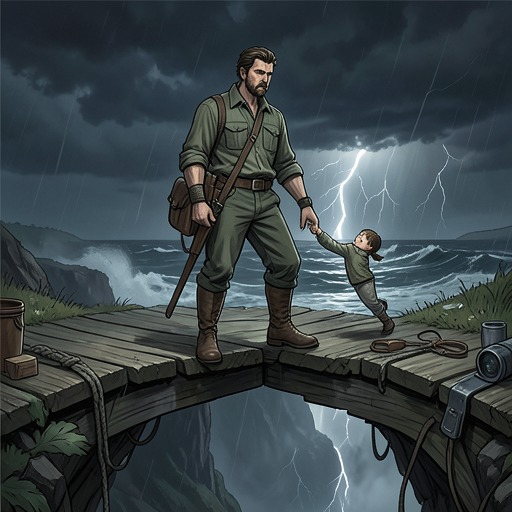
While Adele is alive, she repeatedly insists that Miraijin is the new human being and that humanity will begin again through her. Marco echoes the claim, but the narration makes clear that he initially does so indulgently: he takes it as a fantasy that might help his daughter carry what she has suffered. His playful participation in Adele’s childhood belief about a thread attached to her back similarly suggests a father accommodating a child’s imaginative account rather than recognizing its full significance.
Adele’s thread, in the family’s history, is more than a childhood peculiarity. Marco later understands it as a way she expressed a difficult knowledge of her family’s dangers and needs. When her parents began to understand her, the thread disappeared; amid later upheavals, it returned. That history gives her conviction about Miraijin an added weight, though Marco does not initially accept it as a literal account of destiny.
The loss and its immediate aftermath
Adele dies before Marco is prepared for the void her absence creates. As in earlier crises, he remains standing amid the aftermath rather than immediately finding a way through it. But this time mere endurance is not enough: he needs more strength and determination than he believes he possesses. Following Dr. Carradori’s advice, he spends a period living wildly, while concentrating on caring for Miraijin and taking hold of the life he has left.
His care is not presented as an ideal model of parenting. The account even recalls nights when he gambles while Miraijin sleeps in a hammock. Yet this unsettled period helps him move toward a decisive understanding. His responsibility is not to restore the family life Adele’s death has ended, but to care for the child she left behind.
Recognition through renunciation
Marco’s realization comes when he gives up the enormous winnings from a bitter poker duel with his friend Dami Tamburini. Rather than treating the surrender as an isolated act, he asks why he escaped a plane crash, lost his sister Irene, endured a terrible divorce, took part in ending his father’s life, and buried a daughter aged twenty-two. The questions gather losses from different periods of his life into a single reckoning.
The answer he reaches is Miraijin. The suffering that had seemed like a sequence of unjust blows becomes, in his new understanding, the ground on which a different future can be built. This recognition does not undo the deaths or turn them into simple victories; it changes what Marco believes he is to do with the life that remains.
Miraijin and the meaning of Adele’s death
Marco now believes what Adele had said with unwavering seriousness: Miraijin is the new human being, and humanity will begin again through her. He interprets his own survival and losses as having prepared him to raise her and deliver this future to the world. What had once been, in his mind, a consoling fantasy becomes a belief he genuinely holds, fitting his sober and painful existence.
Adele’s death therefore marks a change in both grief and purpose. Marco does not cease to be bereaved; rather, he finds a demanding responsibility within the loss. Her conviction continues through him, and his role as Miraijin’s grandfather becomes the answer he can give to a past that cannot be reversed.